Over the past six months, Members have been clear about the pressures influencing your work – from ongoing workforce shortages, increasing compliance demands, tightening financial settings, and the rising complexity of delivering human and social services. These realities continued to shape how Not For Profits (NFPs) plan, operate and support their communities.
In response, we focused our advocacy, representation and engagement on what Members told us matters most: clearer guidance, stable program settings, fairer contracting arrangements, and reform processes grounded in the lived experience of frontline providers.
By bringing together insights from across our extended network of NFP organisations, we helped secure clearer decisions, stronger policy signals, and influenced national reform conversations.
A Major Win: DSS Service Fee Recovery Withdrawn
Earlier this year, the Department of Social Services proposed recovering well in excess of $20M in DES service fees dating back to 2019—a move that caused significant concern for providers already navigating tight budgets.
In response, we consolidated member evidence, commissioned specialist legal advice, and presented a clear, practical case to DSS.
The department reversed its position, confirming no debts would be pursued. This was a significant outcome that protected organisational stability, safeguarded jobs, and demonstrated the impact of coordinated sector advocacy.
Landmark Shift Toward Relational Contracting
After 12-months of sustained advocacy, the Minister for Social Services announced at our National NFP Summit that upcoming DSS contracts will shift toward relational contracting, supported by five-year funding agreements and streamlined reporting.
This is a significant shift in how government intends to work with service providers. Members consistently told us that fully retendering entire systems disrupts workforce stability, compromises service continuity, and undervalues high-performing organisations. We elevated this evidence in every meeting.
The Minister also committed to increasing investment in Aboriginal Community Controlled Organisations, recognising that culturally safe, community-led services deliver stronger outcomes.
These announcements reflect what Members have consistently called for: a respectful, stable and evidence-informed partnership between government and the NFP sector.
Member-Led Insight Through Workshops, Summits and Conferences
Our flagship National NFP Summit brought leaders from across Australia together to call for a reset in how governments and providers work together. The need for long-term, relational partnerships was a consistent theme—reinforced by Minister Plibersek and sector academics—and this momentum is now shaping our engagement with government.
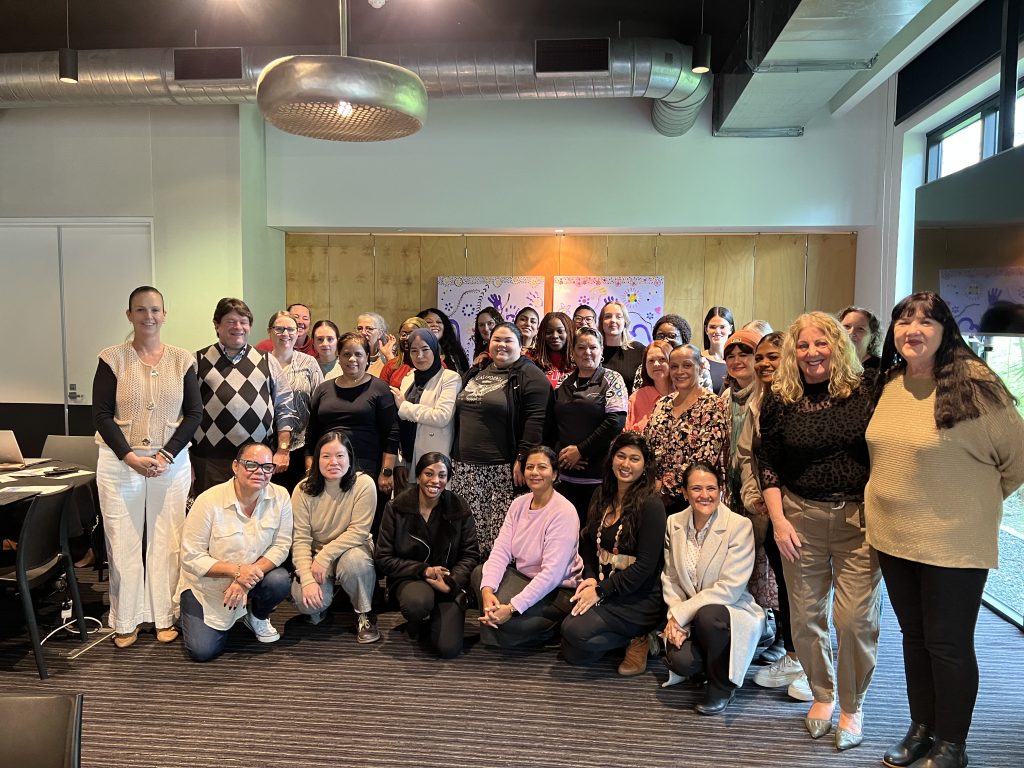
Member insights and input deepen our advocacy through conversations, consultations and dialogues. Engagement with Members through attendance at workshops and conferences, one-on-one connection and Member site visits inform how we plan meaningful topic integration.
This has underpinned our:
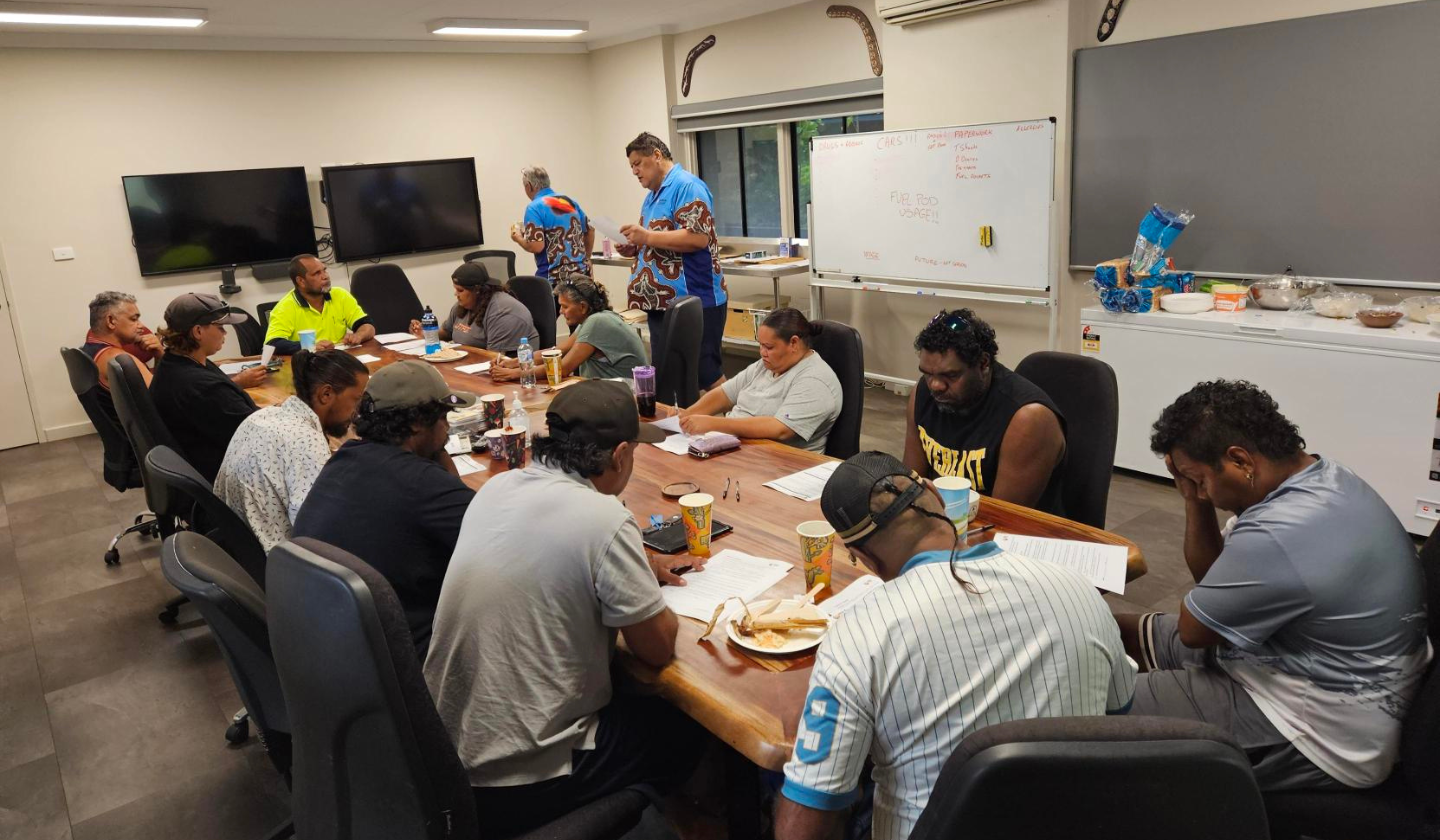
- Indigenous Services Workshop: Community leaders highlighted the need for Indigenous-led, culturally grounded approaches across justice, education, disability and employment.
- Social enterprise, housing and disability conferences: Members helped bring a unified sector voice to national policy discussions.
- Targeted NDIS employment consultations: Insights have shaped our early 2026 advocacy priorities and strengthened our position on sustainable and participant-centred NDIS.
These forums ensure our representation remains grounded in lived experience and aligned with the priorities of organisations delivering essential services, every day.
Strengthening Pathways into Mainstream Policy for Social Enterprise
Amplify Alliance is well placed to convene, connect and advocate for NFPs building social enterprise models alongside social and human services. Our work in this space continues to build momentum, strengthening recognition of social enterprise as a key driver of economic participation, inclusive employment and community wellbeing.
Our focus is twofold:
- Developing practical policy proposals informed by Member insight and global learning.
- Partnering with social enterprises to test initiatives that can shape mainstream policy and support sustainable, community-led employment pathways.
At our From Boutique to Mainstream workshop, Members shaped recommendations for government on employment pathways, impact investment, disability employment reform and a national strategy for social enterprise.
We supported Member participation at the Social Enterprise World Forum (Taiwan) and Social Enterprise Open Camp (Italy), providing exposure to global models, emerging investment approaches and place-based innovation. These insights are now informing our work to strengthen local social enterprise ecosystems and identify opportunities for adaptation within the Australian context.
Amplifying Community Priorities for Indigenous Services
Our “Listening, Learning, Leading: Pathways to Change” workshop in Darwin reinforced the importance of Indigenous-led, culturally grounded decision-making and long-term investment across justice, education and disability.
Key insights:
- Justice: Overrepresentation of Indigenous youth demands culturally grounded diversion, healing on Country and Indigenous governance.
- Employment: Compliance-heavy programs such as CDP failed; future reforms must centre Indigenous-led enterprise, mentoring and accountability.
- Education: Engagement in remote schooling requires wellbeing support, bilingual learning and strong pathways to employment.
- Disability: Extremely low NDIS participation highlights the need for culturally safe, locally governed disability services and workforce pipelines.
We provided these insights directly to senior leaders at the National Indigenous Australians Agency (NIAA), along with a written report to inform policy development. Engagement is set to deepen through our request to meet with Minister McCarthy to ensure these priorities remain central in national reform conversations.
This work strengthens our advocacy for integrated approaches that reflect community knowledge and support better outcomes for Aboriginal and Torres Strait Islander peoples.
RAES and RJED: Greater Clarity, Stronger Voice
In the lead-up to the new RAES contract, Members raised issues around guidance, remote loadings and implementation timeframes. Through direct engagement with Members and NIAA:
- Incorrect remote loadings were identified and corrected.
- Clearer guidance was issued.
- Practical implementation questions were addressed early.
- Program transitions were smoother ahead of the 1 November start.
Our presence at the NIAA Provider Induction ensured Member insights remained present in ongoing program design.
Workforce Australia, Parent Pathways & ESPs: Keeping Member Realities Front and Centre
Members shared consistent concerns about performance expectations, financial viability and frontline pressures across Workforce Australia, Transition to Work and Parent Pathways programs. We used these insights to guide every engagement with government, ensuring reform conversations remain grounded in real operational experience.
Our advocacy included:
- A joint Canberra delegation to discuss changes to the Workforce Australia Performance Framework.
- Active participation in the Managed Service Plan (MSP) Working Group, raising frontline challenges and advocating for workable adjustments.
- Targeted engagement with DEWR on the financial model and caseload settings for Parents Pathway.
- Facilitation of the Transition to Work Community of Interest, now a valued collaboration forum.
- Ongoing evidence collection in preparation for the Employment Services Review.
These efforts ensure the next iteration of employment services is shaped not only by policy intent, but by real operational experience.
IEA Tender and Quality & Performance Framework
Members expressed strong concerns about the Inclusive Employment Australia (IEA) tender outcome and the disruption caused by large-scale participant movement. We relayed these concerns directly to Department of Social Services, including Minister Plibersek and senior officials.
We continued to advocate for:
- Market settings that reward high performance.
- Reduced disruption for participants.
- Evidence-based design that strengthens—not fragments—the disability employment system.
We also remain active contributors to the Quality & Performance Framework development.
Shaping the Future of Skills
Our consultation on the National Skills Taxonomy (NST) revealed strong Member support for a “skills-first” approach—provided equity, flexibility and recognition of real-world capability are built in from the outset. Members also highlighted risks such as digital exclusion, employer bias and unnecessary compliance burden.
Your insights shaped our submission to Jobs and Skills Australia, advocating for an NST that expands opportunity rather than constraining it.
Using Member Voices Shape Reform Through Clarion Calls
Our Clarion Calls provided real-time insights into contract pressures, workforce challenges and operational realities. This intelligence directly informs:
- Submissions on program reform,
- Positions on tender and contract impacts,
- Conversations with Ministers and departmental leaders.
Your Expert Partner in Workforce, HR and Employment Matters
Members continued to navigate workforce and compliance demands, seeking advice, assistance and clarification with our Workplace Relations team who offered supportive advocacy, representation and engagement through:
- 6 seminars/webinars on Fair Work Act amendments, respectful workplace principles and complaint handling.
- Unfair dismissal and general protections matters, represented on 8 occasions.
- Numerous reviews for position classification (modern award compliance).
- A substantial ongoing Enterprise Agreement negotiation and 4 comprehensive EBA analysis and option papers.
- Regular performance management, compliance guidance and 2 major change management reviews.
- More than eighty contract, policy, position and award reviews.
- Daily on-call support.
Preparation for DEWR’s Closing the Loopholes Review in 2026 has commenced, and Member input will be sought early in the new year.
A New Space for Executive Clarity and Capability
In response to Member feedback, the inaugural session of our C-Suite Series in November attracted Members to join a space to unpack emerging compliance requirements, hear directly from specialists, and learn from peers.
This initial session covered Payday Super, Sustainability Reporting and Portable Long Service Leave. More sessions will be offered in 2026, with a focus on practical tools and shared learning.
Ministerial Representation
During the second half of 2025, Ministerial briefings were provided to convey member feedback, issues and queries. These briefings were underpinned by Amplify Alliance’s 2025 Federal Election Priorities, which continue to guide our advocacy platform and are informed through membership engagement and commentary.
- Senator the Hon Jenny McAllister MP, Minister for the NDIS
- The Hon Emma McBride MP, Assistant Minister for Mental Health and Suicide Prevention & Assistant Minister for Rural and Regional Health
- The Hon Mark Butler MP, Minister for Health, Disability and Aged Care
- The Hon Patrick Gorman MP, Assistant Minister for Charities, Productivity, Competition & Treasury, Assistant Minister to the Prime Minister, Assistant Minister for the Public Service, and Assistant Minister for Employment and Workplace Relations
- The Hon Dr Andrew Leigh MP, Assistant Minister for Charities, Productivity, Competition & Treasury
- Senator The Hon Malarndirri McCarthy, Minister for Indigenous Australians
- The Hon Tanya Plibersek MP, Minister for Social Services
- The Hon Rebecca White MP, Assistant Minister for Women, Assistant Minister for Indigenous Health, and Assistant Minister for Health and Aged Care
- The Hon Amanda Rishworth MP, Minister for Employment and Workplace Relations
- The Hon Ged Kearney MP, Assistant Minister for Social Services and Assistant Minister for the Prevention of Family Violence
- The Hon Clare O’Neil MP, Minister for Housing, Minister for Homelessness, and Minister for Cities
Opportunity for discussion through CEO and staff engagement have occurred with Minister Plibersek, Assistant Minister Kearney, Minister Rishworth, Assistant Minister Leigh and Jodie Belyea MP.
Looking Ahead To 2026
The year ahead will bring significant reform across employment services, NDIS markets, Indigenous-led service design, workplace relations and housing policy.
While the year ahead may be significant for the NFP sector, our focus remains steady: ensuring Member insights drive national reform efforts and that the issues affecting your organisations receive clear, consistent advocacy.
We invite you to share the priorities you want amplified in the new year.
Our Representation & Advocacy, Workplace Relations and Membership Services teams are here to support you with informed and targeted advocacy, representation and engagement. Your input is valued and highly regarded, so please contact us with your feedback.
Endorsed by Amplify Alliance Australia CEO, Debra Cerasa.
Amplify Alliance represents the largest network of Not For Profit organisations delivering and supporting human and social services in Australia. Our work is centred on the key determinants of wellbeing: Jobs, Home, Learning, Health, Social Connection and Social Justice.